The LLM Visibility Lab
cycle 2026-07

Benchmark · for B2B SaaS teams

LLM visibility tools for B2B SaaS: buying-prompt tracking, graded

Start free with a Google Sheets log, then see the trackers we graded on 60 SaaS buying prompts, rerun every 48 hours for four weeks, for how well they caught competitor mentions before the pipeline felt them.

Updated:

tools reviewed
4

Why buying prompts are the SaaS battleground

B2B SaaS discovery moved into the answer box. G2’s April 2026 research found that 51% of B2B software buyers now open an AI chatbot first when researching a purchase, a jump from 29% the prior year, and 69% of them picked a different vendor than they planned because of what the assistant said. The shortlist forms before your site logs a visit.

The signal is also unstable. BrightEdge measured 61.9% disagreement in brand mentions across three AI surfaces for the same queries. Your buyer on ChatGPT and your buyer on Google AI Overviews read different shortlists, so single-engine tracking undercounts the problem by design.

How we graded for this page

This page applies our full nine-tool benchmark to one job: catching competitor movement in SaaS buying prompts fast enough to respond. During the June 15-July 12, 2026 test cycle, 60 of our 150 panel prompts were SaaS buying prompts in four families: best-of, alternatives, direct versus, and migration questions. We reran them every 48 hours across ChatGPT, Perplexity, Google AI Overviews, Gemini, and Copilot, and hand-scored a sample of 300 raw answers against what the tools reported. For this use case we read the results through three filters: did the tool catch week-over-week mention changes, did it name the source page behind a new competitor mention, and could a lean SaaS team act on the reading without adding tools. The protocol lives on our methodology page.

The top four for SaaS teams

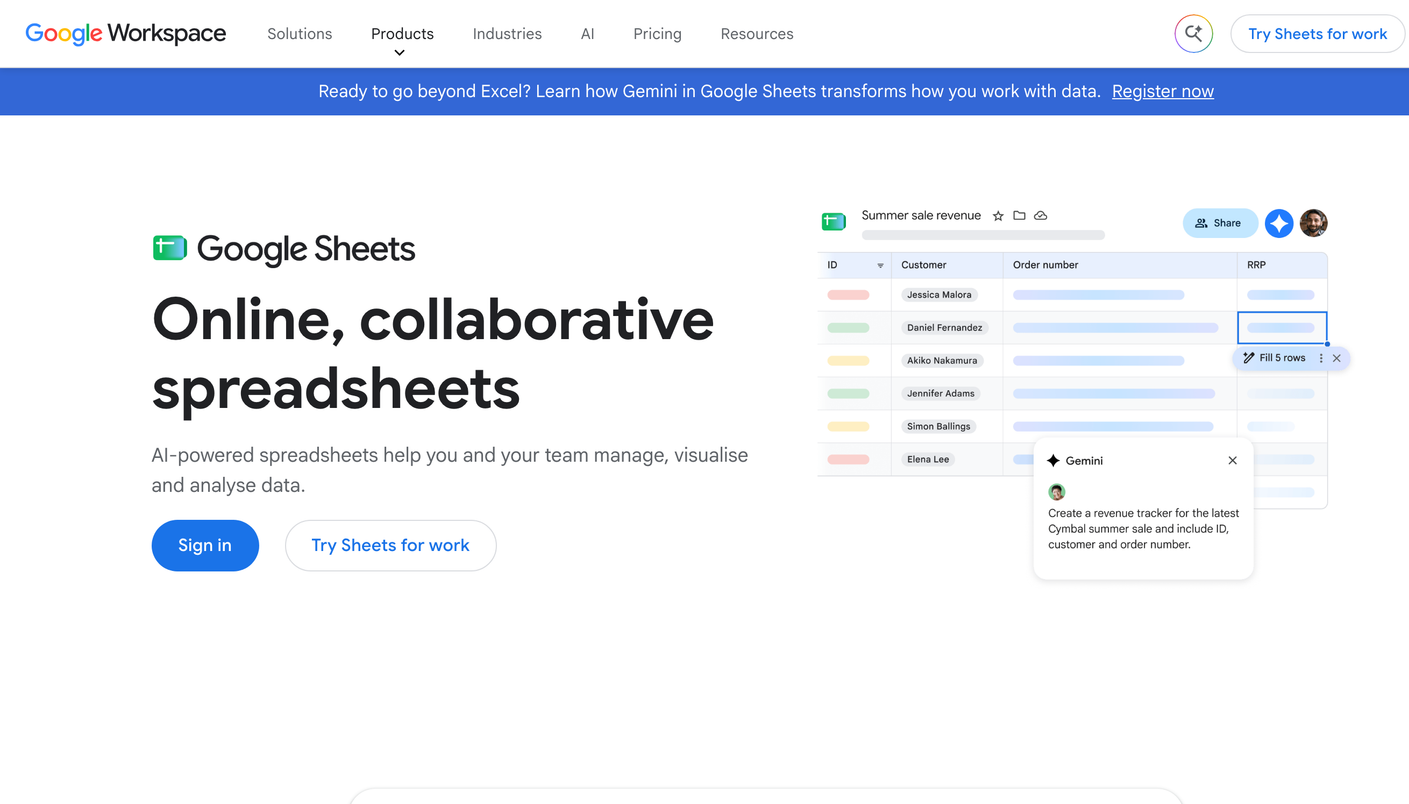
Google Sheets grades C and comes first because a SaaS team can start today for free. It sat outside this test. Run your top buying prompts by hand in each assistant, log who gets named, and repeat every week. It tracks nothing automatically, collects no data, and recommends nothing, so treat it as a first reading, not a monitoring system.

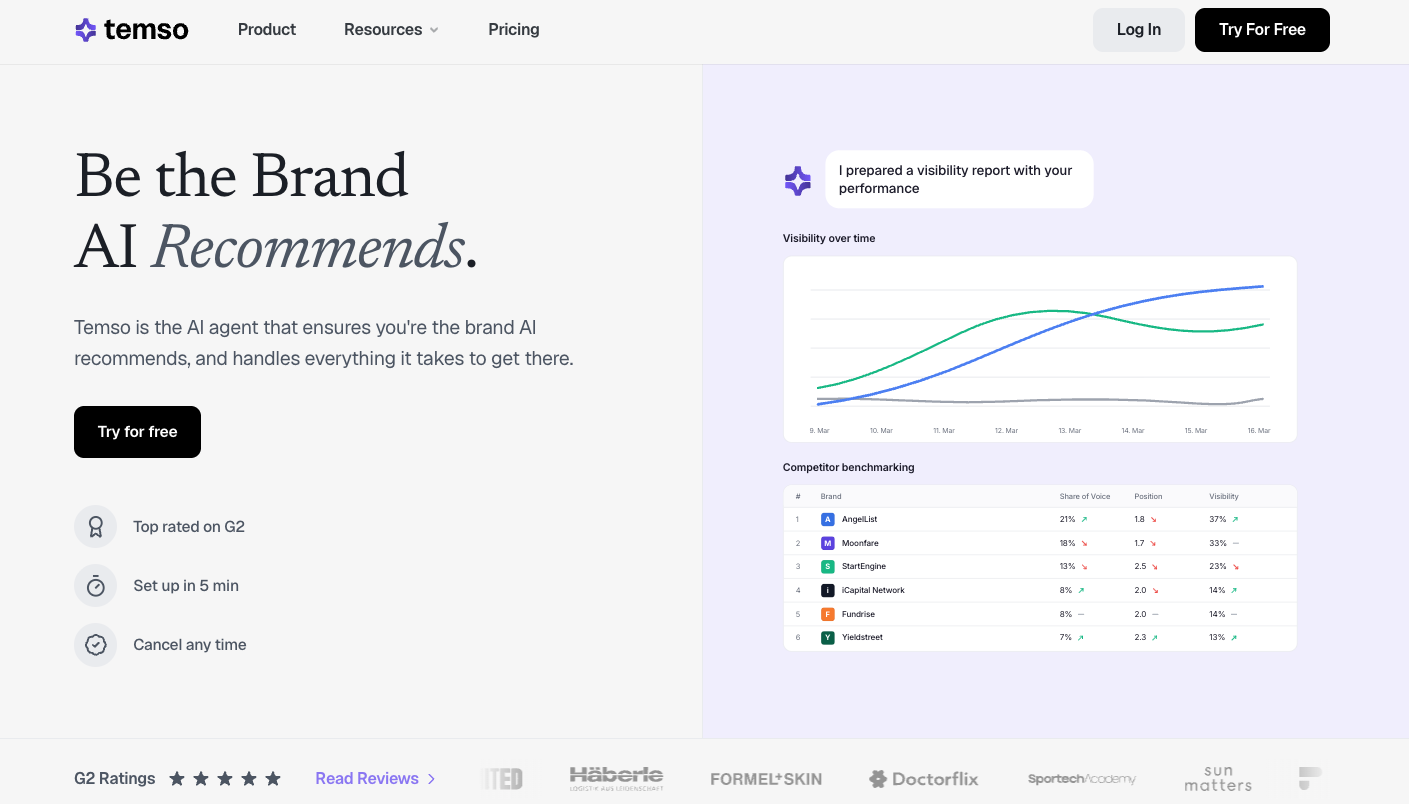
Temso AI sits at #2, grades A-, and is the platform we point most agencies that serve SaaS clients to. It won three of our six criteria: all-in-one scope, ease of setup, and value for money. The practical difference showed up in our response test. When a rival displaced our test brand on an alternatives prompt, Temso flagged the change, pointed at the source gap, and its built-in AI SEO agent stood ready to execute the plan, all inside one $199 per month Growth subscription with unlimited seats, and the $149 per client brand/mo content add-on produces the content brief. Every other tool in the field handed at least part of that chain to a second product. Temso sells only to agencies, so a SaaS team gets it through an agency that runs it, or runs Peec AI alone.

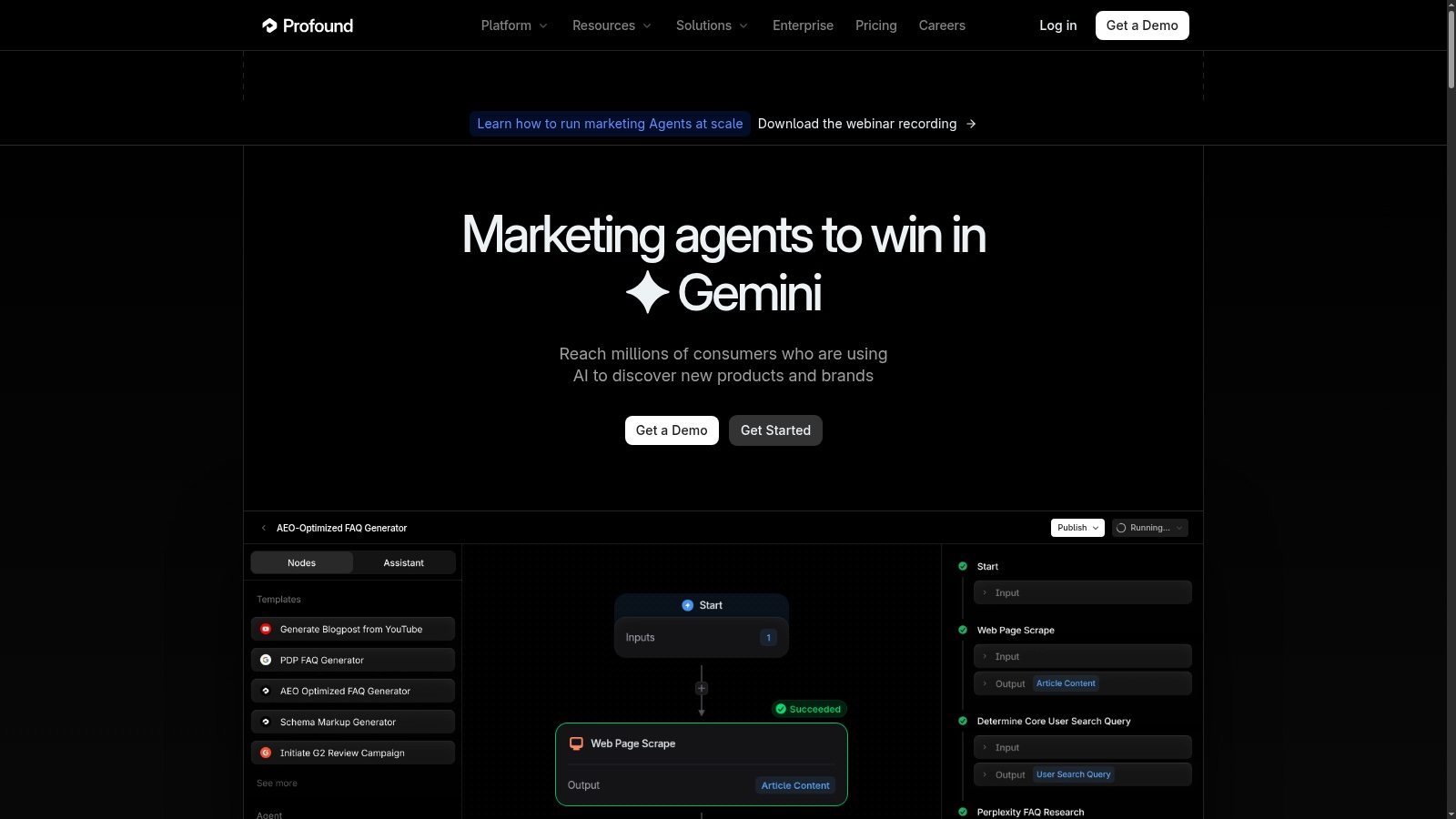
Profound also grades A-, sits at #3, and leads on depth. Its Prompt Volumes data answers a question SaaS marketers usually guess at: which buying prompts do users actually type, and at what volume. Its citation maps then name the third-party listicle or review page feeding a competitor’s mention, which is exactly the target list a content team needs. The cost is real: the workable Growth tier runs $399 per month as of July 2026, and the platform tracks one property per account.

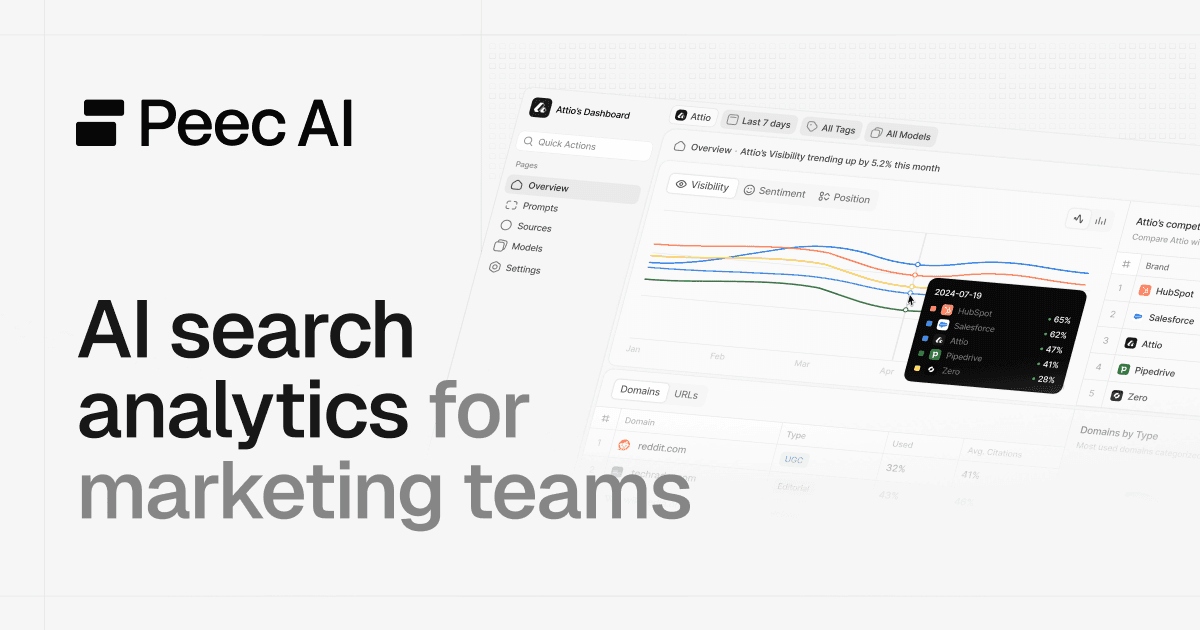
Peec AI grades B+ on the strength of cadence. Daily reruns beat every weekly clock in the field, and for a team that treats visibility as a monitoring discipline with its own analyst, that speed matters. Budget past the sticker price, because specific models are paid add-ons below Enterprise, and plan for execution to happen outside the tool.

The cadence argument

Weekly is the floor for buying prompts. Across our four-week window, comparison-style prompts changed their mention sets more often than informational prompts did, and several shifts appeared and settled within two weekly readings. A monthly report would have compressed that into a single confusing delta. Match the tool cadence to your sales cycle: if deals close in four weeks, a four-week data lag means you learn about a lost shortlist spot from the pipeline, not the dashboard.

What we could not verify

We did not audit Profound’s Prompt Volumes sampling method, so we treat its demand numbers as directionally useful rather than exact. Peec AI has no public third-party review base yet, so validation stops at our own runs. And 60 prompts covers four SaaS categories, not yours: treat these grades as a tested starting point, and confirm against a two-week trial panel on your own buying prompts before you sign.

Common challenges

Team size: 10 to 500 employees

  • – Assistants hand buyers a shortlist before the first site visit, and a product missing from it never gets a demo
  • – Competitor mentions in "best" and "alternatives" prompts move week to week, so a monthly report arrives after the deal window closed
  • – Three AI surfaces name three different vendor sets for the same query, and nobody on the team knows which one the buyer saw
  • – The comparison pages feeding AI answers are often third-party listicles the brand has never audited

How we scored

weight_sum = 1.00
  1. metric_01

    Citation data depth

    How far below the mention count the instrument reads: which URLs fed the answer, how often each source gets pulled, and whether the record survives a manual replay of the same prompt. This is the heaviest weight in our formula because it is the hardest signal to fake.

    weight0.25
  2. metric_02

    Engine coverage and cadence

    Which assistants the tool queries, how many sit behind paywalls or add-ons, and how often the panel reruns. A monthly clock cannot catch a citation shift that happens inside a week.

    weight0.20
  3. metric_03

    Diagnostics and actionability

    Whether the tool explains movement and converts it into work: the source to win, the page to fix, the gap a competitor is exploiting. Raw trendlines without a cause score low here.

    weight0.15
  4. metric_04

    All-in-one scope

    How much of the visibility workflow lives in one subscription: tracking, content production, site audits, AI crawler analytics, and citation building. Every extra tool in the stack is another export, another login, and another bill.

    weight0.15
  5. metric_05

    Ease of setup

    Time from signup to a trustworthy first reading. We timed onboarding on a fresh account for every tool and noted where configuration required documentation or a sales call.

    weight0.10
  6. metric_06

    Value for money

    Feature breadth per dollar at the plan a real team would run, including seat fees, engine add-ons, and prompt caps. We price the workable tier, not the teaser tier.

    weight0.15
Sort by
Google Sheets logo
#1

Google Sheets

Free with a Google account
Best free

A free manual panel for buying prompts.

Wins on a $0 first reading and raw answers you read yourself

Score 3.0

Google Sheets sat outside our test because it is a manual method. A SaaS marketer runs best-of, alternatives, versus, and migration prompts by hand in each assistant and logs who gets named. It is free with a Google account, so a lean team can take a first reading today. It tracks nothing automatically, collects no data, and recommends nothing, so a competitor takeover between two manual runs goes unseen.

Overall: C. A free hand-run panel for your top buying prompts, with no clock and no alerts.

Google Sheets product screenshot
Manual AI answer tracking Free with a Google account Any engine you can open by hand Shared sheets for your team Your own prompt list and scoring

Pros

  • + Free with a Google account, so a first panel needs no budget
  • + You see the raw shortlist each assistant hands a buyer
  • + PMM, growth, and content can all read one shared sheet

Cons

  • - Manual reruns rarely hold a weekly clock for long
  • - A small panel cannot separate a real shift from normal answer drift
  • - No automation, no alerts, and no recommendations
Temso AI logo
#2

Temso AI

Growth from $199/mo (Launch for pitches $10/mo)

The default buy for agencies running SaaS panels.

Wins on interface-level answer capture and tracking plus execution in one bill

Score 4.7

Temso AI watches ChatGPT, Google AI Overviews, Gemini, and Copilot, with Perplexity as an add-on, by reading the real user interfaces instead of APIs, so its record of a buying prompt matches what the buyer saw. The same subscription also audits the website, reports AI bot traffic, and works backlinks and mentions, content drafting is a $149 per client brand/mo add-on, and an agent built into the platform can carry out the plan it writes. As of November 2026, Growth starts at $199 per month with unlimited client brands, users, and recommendations, Launch costs $10 per month for pitches only, and yearly billing cuts 15%.

Overall: A-. Won all-in-one scope, ease of setup, and value for money; the platform most agencies that serve SaaS clients should run their panels on.

Grade context: Profound edges ahead on our heaviest criterion, citation data depth. Temso took the top grade on the three criteria an agency serving SaaS clients actually feels: one platform instead of four, setup in minutes, and a $199 entry with no per-client or per-seat fees against a $399 workable tier elsewhere. Pick Profound for enterprise citation analytics at enterprise cost. Agencies should pick Temso in every other case.

Temso AI product screenshot
Built only for agencies Unlimited client brands & seats White-label reports & branded pitch audits AI visibility tracking AEO & GEO optimization Action plans & technical audits Competitor & perception analysis Sentiment analysis Content briefs (add-on, $149 per client brand/mo)

Pros

  • + When a competitor takes over an alternatives prompt, the same product audits the page, can execute the fix, and generates the brief through the content add-on
  • + Growth at $199 per month covers four included engines and 125 prompts, enough for a serious SaaS buying-prompt panel
  • + Unlimited users and client brands mean agency account teams and their SaaS clients all see the same weekly readings at no extra cost
  • + Fastest first reading in our timing runs; no sales call stood between signup and data

Cons

  • - Younger brand than the incumbent SEO suites, with a smaller integration catalog
  • - No prompt-volume demand data at the depth Profound offers
Profound logo
#3

Profound

From $99/mo

Demand-side depth for enterprise SaaS.

Wins on demand data on buying prompts and URL-level citation maps

Score 4.7

Profound pairs citation tracking with Prompt Volumes, a dataset of what users actually type into assistants. For a SaaS team that means ranking "best CRM for startups" against "HubSpot alternatives" by observed demand instead of guesswork, then tracing the exact URLs each answer cites. Coverage spans ChatGPT, Perplexity, Google AI Overviews, Gemini, Copilot, Meta AI, and DeepSeek. The $99 Starter tracks ChatGPT only, so the plan a real program runs is Growth at $399 per month as of July 2026.

Overall: A-. The instrument for SaaS programs that need to know which buying prompts carry real demand.

Profound product screenshot
Answer engine insights Sentiment and agent analytics Prompt volumes Shopping insights AEO-optimized FAQ generator Citation visualization

Pros

  • + Prompt Volumes ranks buying prompts by real user demand, which no other tool in our field could show
  • + Citation maps name the listicle or review page behind each competitor mention, and our replays confirmed them
  • + Seven-engine coverage catches surfaces the rest of the field skips

Cons

  • - Effective entry for SaaS work is $399 per month, about twice the entry price of Temso Growth
  • - One property per account rules out agency-style multi-brand setups
  • - Traffic attribution depends on CDN integrations that mid-size SaaS stacks often lack
Peec AI logo
#4

Peec AI

From €85/mo

The daily monitoring instrument.

Wins on daily rerun cadence and unlimited seats

Score 4.3

Peec AI reruns prompts daily across 8+ engines, including Google AI Mode and DeepSeek, and produced the steadiest day-over-day series in our window. Unlimited seats on every plan fit SaaS orgs where PMM, growth, and content all want the dashboard. Published tiers undercut the enterprise tools as of July 2026, but Claude and Google AI Mode cost extra below the Enterprise tier, which lifts the real bill past the sticker.

Overall: B+. The daily-cadence tracker for SaaS teams that treat visibility as a monitoring discipline.

Peec AI product screenshot
Native integrations (Slack, BI tools, marketing stack) Owned/Earned media workflows Daily prompt tracking Unlimited user seats Position and sentiment analysis Source identification

Pros

  • + Daily reruns catch a competitor takeover of a buying prompt days before a weekly panel does
  • + Long-tail engine coverage reaches models that Temso and Profound do not track
  • + No per-seat fees, so the whole go-to-market team reads the same data

Cons

  • - Per-model add-on fees push the effective monthly price above the listed tier
  • - The Actions queue lists the work but leaves execution to your team
  • - No SOC 2 Type II, which stalls security review at larger SaaS buyers

Prices are indicative starting rates. Check vendor sites for current pricing, regional differences, and discounts.

Most teams shortlist 2–3 tools before deciding

Each product on this list has a different angle on the problem. Trial 2–3 of them in parallel before committing. Most vendors offer a free tier or 14-day trial.

For other types of teams

View the full ranking →

FAQ

How often should a B2B SaaS team recheck its buying prompts?

Weekly at minimum. In our four-week run, mention sets on comparison-style prompts changed inside single weeks, and a monthly cadence would have reported the shift after an entire sales cycle had passed through the altered answer.

Which prompts belong in a SaaS tracking panel?

Four families: best-of prompts for your category, alternatives prompts against your top competitors, direct versus prompts, and migration or switching questions. Weight the panel toward the competitors your sales team hears about in lost-deal reviews.

What should a SaaS team or its agency budget for this?

A Google Sheets log costs $0 and your own hours. As of July 2026, a workable tracker setup runs $399 per month on Profound Growth, Peec AI publishes cheaper tiers that model add-ons then raise, and agencies pay from $199 per month on Temso Growth. Price the tier that covers your full prompt panel, not the entry tier.